Affiliate disclosure: WattList may earn a commission when you buy through links on this page (ShareASale, Impact, Amazon Associates, and similar). That does not change our picks — we call out trade-offs and when a cheaper unit is enough. Prices and specs change; verify before you buy.
If you want a portable power station under $1,000 in 2026, you are shopping in the sweet spot: enough watt-hours for a weekend fridge, a short blackout, or a van night — without hauling a 50 lb brick or paying whole-home backup money.
This guide is for people who will actually carry the unit, plug real loads into it, and care about Wh, output watts, LiFePO4 cycle life, ports, weight, and recharge speed more than marketing slogans.
Quick picks
| Use case | Pick | Why |
|---|---|---|
| Best overall | Anker SOLIX C1000 Gen 2 | Fast wall charge, 2 kW output, 24.9 lb |
| Best Wh / $ | Bluetti AC180 | 1,152 Wh at typical ~$450–$500 |
| Lightest ~1 kWh | Jackery Explorer 1000 v2 | 23.8 lb daily driver |
| May expand later | EcoFlow DELTA 3 | Extra batteries to 5 kWh |
| Compact / budget | EcoFlow RIVER 2 Pro | 768 Wh, ~18 lb, often ~$349 |
Anker SOLIX C1000 Gen 2 · Bluetti AC180 · Jackery Explorer 1000 v2 · EcoFlow DELTA 3 · EcoFlow RIVER 2 Pro
How we picked (buying criteria that matter)
Ignore “solar generator” branding. These are lithium battery + inverter boxes. Judge them on:
1. Capacity (Wh)
Watt-hours = how much energy is in the tank. Rough mental model for a ~1,000 Wh unit (after ~85–90% usable inverter efficiency):
- Router + phone charging: many hours / overnight easy
- 12V compressor fridge (intermittent ~30–60 W average): often a full day+
- Mini fridge + lights + devices: plan carefully; may need solar or a mid-day top-up
If you need fridge + Wi‑Fi + overnight CPAP-class loads, read our sizing notes below — and check your device’s label wattage; for CPAP, talk to the manufacturer about DC options and humidifier draw. We do not make medical claims.
2. Output (continuous W + surge)
Continuous watts must clear your hungriest device. A 1,500 W inverter covers most camp kettles and induction-adjacent fantasies less well than people hope — check the kettle. Fridges and tools care about surge. Prefer units that publish both continuous and surge ratings.
3. Chemistry: LiFePO4 vs NMC
In 2026, almost everything worth buying under $1k is LiFePO4 (LFP) — typically marketed around 3,000–4,000+ cycles to a residual capacity threshold. Older NMC packs are lighter for the same Wh but age faster. Prefer LFP unless you have a specific weight constraint and accept shorter calendar life.
4. Ports
Count what you will use the same hour:
- AC outlets (2–6)
- USB-C PD (look for 100 W if you charge a laptop from USB-C)
- USB-A, 12V car outlet, sometimes wireless pad
- Solar XT60 / Anderson / brand proprietary input
5. Weight and form factor
A 1 kWh LFP pack usually lands ~23–36 lb (Jackery 1000 v2 23.8 lb, Anker C1000 Gen 2 24.9 lb, DELTA 3 27.6 lb, AC180 35.3 lb). That difference matters when you are loading a hatchback or storing under a van bench. Jackery’s 1000 v2 is the “I will actually carry this” benchmark; Bluetti AC180 trades weight for Wh and output.
6. Recharge (wall + solar + car)
Wall recharge under ~1–2 hours is table stakes for mid-range 2026 units. Solar input caps (200–600 W+ on this class) decide whether you can recover overnight camping use with one foldable panel. Car charging is slow — treat it as top-up, not primary.
Comparison table (under $1,000 class)
| Model | Wh | AC (cont/surge) | Weight | Solar in | Wall full | Street (Sep 2026) | Best for |
|---|---|---|---|---|---|---|---|
| Anker C1000 Gen 2 | 1,024 | 2,000 / 3,000 W | 24.9 lb | 600 W | 49 min* | ~$430–$530 | Overall / fast charge |
| Jackery 1000 v2 | 1,070 | 1,500 / 3,000 W | 23.8 lb | 400 W | ~1 hr* | ~$499–$559 | Lightest carry |
| Bluetti AC180 | 1,152 | 1,800 / 2,700 W | 35.3 lb | 500 W | 1.3–1.8 hr | ~$450–$500 | Most Wh / $ |
| EcoFlow DELTA 3 | 1,024 | 1,800 / 3,600 W | 27.6 lb | 500 W | 56 min | ~$599–$699 | Expand later |
| DELTA 3 Plus | 1,024 | 1,800 / 3,600 W | 27.6 lb | 1,000 W | 56 min | ~$669–$799 | Dual-panel solar |
| RIVER 2 Pro | 768 | 800 / 1,600 W | 18.2 lb | 220 W | 70 min | ~$349 | Compact / light loads |
| Jackery 2000 v2 | 2,042 | 2,200 / 4,400 W | 39.5 lb | 400 W | ~1.7 hr* | ~$799–$899 | 2 kWh if under $1k |
Compare Anker SOLIX C1000 Gen 2 · Compare Jackery Explorer 1000 v2 · Compare Bluetti AC180 · Compare EcoFlow DELTA 3
Best overall under $1,000: Anker SOLIX C1000 Gen 2
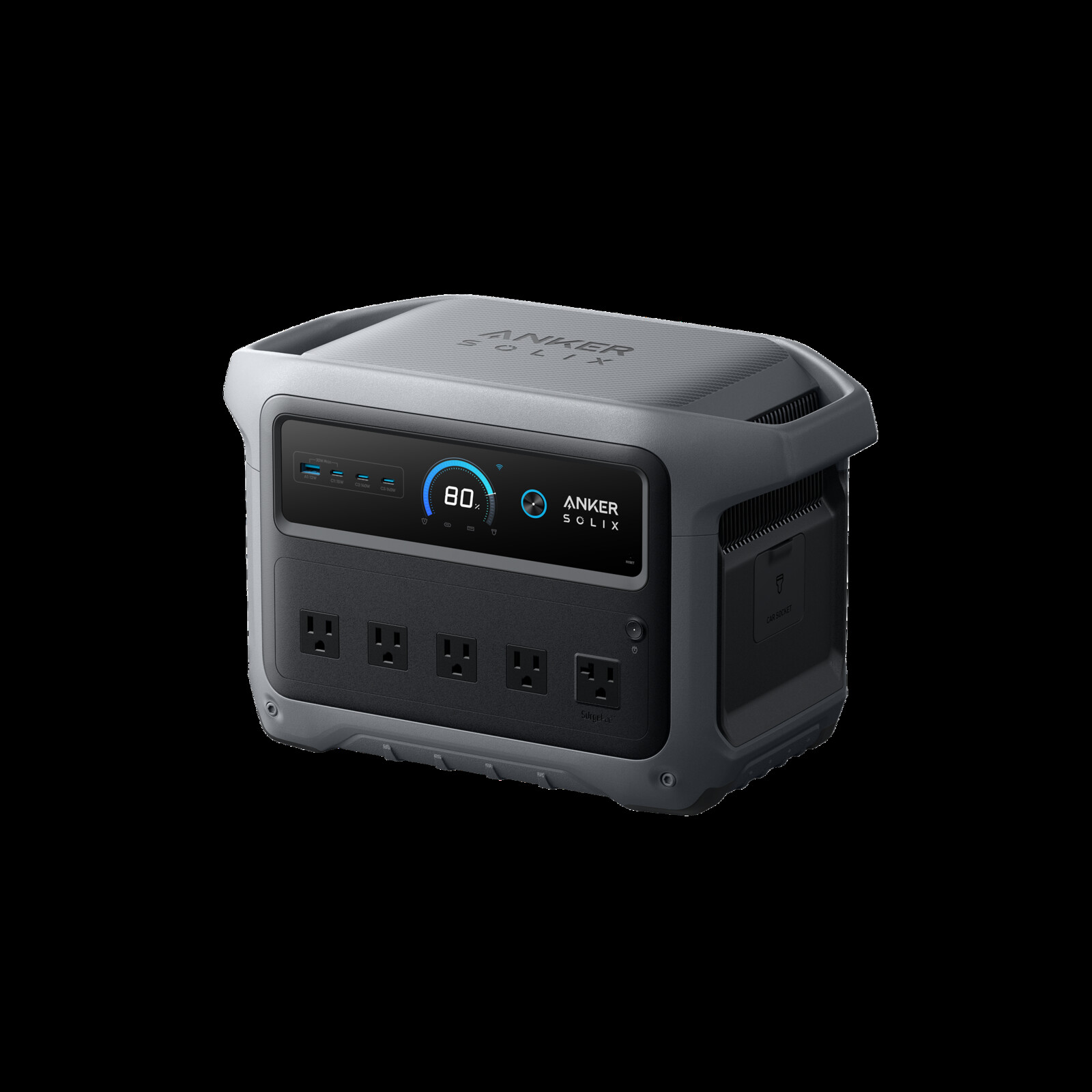
Who it’s for: Campers and apartment dwellers who want a 1,024 Wh LFP pack that recharges fast from the wall and can shove serious AC watts when a kettle or tool spikes.
Why it wins for many people: Official specs: 1,024 Wh, 2,000 W continuous / 3,000 W peak, 24.9 lb, 600 W solar, 4,000 cycles to 80%. UltraFast wall charge is 0–100% in 49 minutes at 1,600 W (enable in the Anker app; standard AC input is 1,200 W). App control and 10 ms UPS matter for desk setups and short outages. Gen 2 is not expandable (the original C1000 is) — that is the trade for the smaller, lighter box.
Pros
- Fastest published wall recharge in this class (49 min UltraFast)
- Highest continuous output here (2,000 W) at 24.9 lb
- LiFePO4, 4,000 cycles to 80%
- 10 ports including dual 140 W USB-C; 10 ms UPS
Cons
- Fans can get noticeable under load (common complaint in this class)
- No expansion battery — buy the original C1000 if you need that path
- Brand ecosystem for solar panels is competitive, not uniquely cheap
- List is $799; the pick assumes you buy on a typical $430–$530 street sale
CTA: Anker SOLIX C1000 Gen 2 — check Amazon and Anker direct; use whichever is cheaper after shipping.
Best capacity per dollar: Bluetti AC180
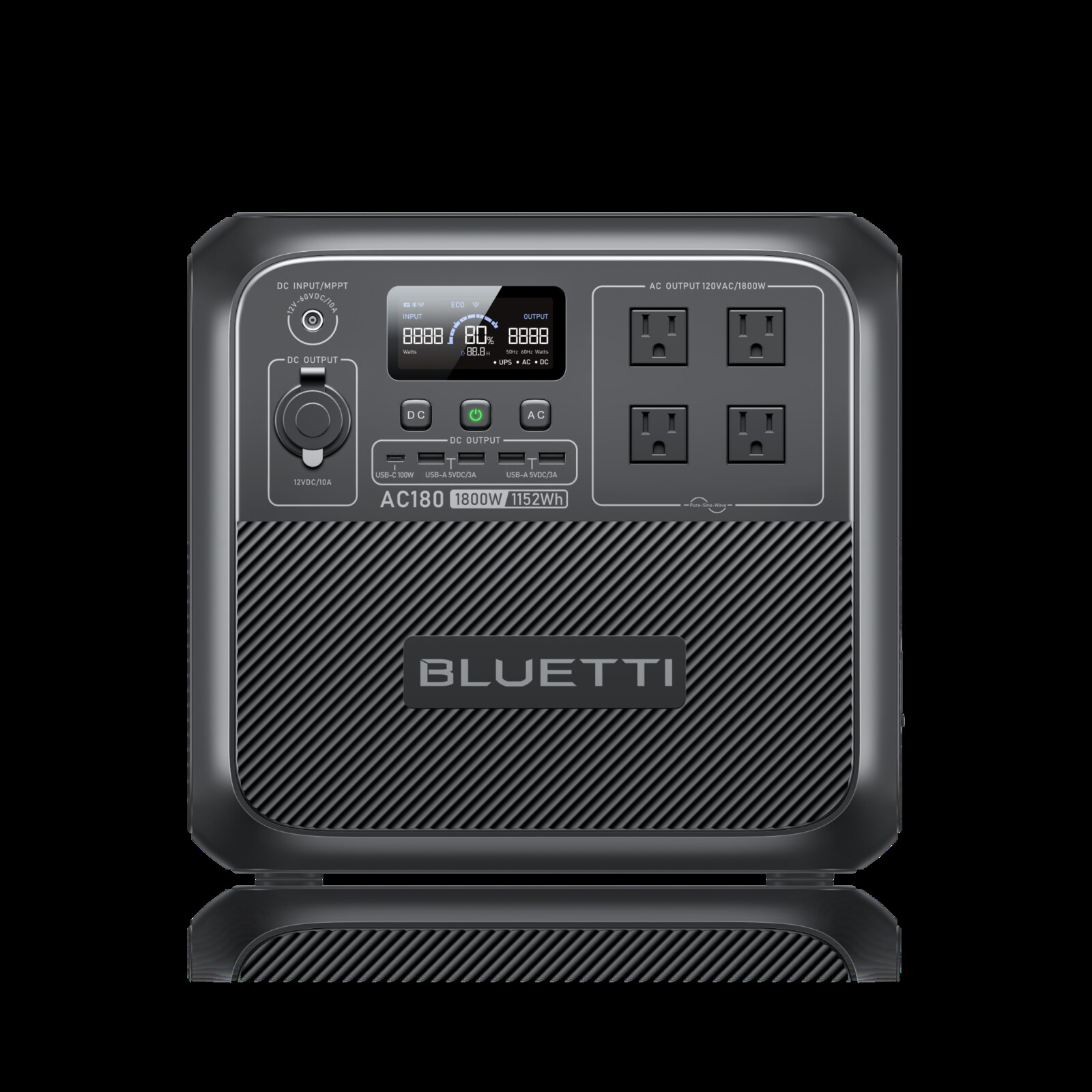
Who it’s for: Buyers who want maximum Wh and AC headroom under the $1k cap and do not mind 35.3 lb.
Why it lands here: Official specs: 1,152 Wh, 1,800 W continuous / 2,700 W Power Lifting Mode, 35.3 lb, 500 W solar, 3,500+ cycles to 80%. Turbo AC input is 1,440 W — 0–80% in 45 minutes, 0–100% in 1.3–1.8 hours. Dense ports include a 15 W wireless pad and a 100 W USB-C. Street price is often the lowest in this 1 kWh set (~$450–$500; $499 on brand site and Amazon as of 5 Sep 2026). If your use case is car camping with a fridge and you load from a hatch — not a long hike — weight is fine. No native extra-battery expansion (Bluetti FAQ: B80/B230/B300 can only charge the AC180 in Power Bank mode).
Pros
- Highest capacity among common sub-$1k 1 kWh rivals
- Strong inverter (1,800 W) plus 2,700 W lifting mode for resistive heat loads
- LFP longevity (3,500+ to 80%); 5-year warranty; mature Bluetti app
Cons
- Heaviest here vs Jackery 1000 v2 (23.8 lb) / Anker C1000 Gen 2 (24.9 lb)
- Wall/solar recharge is good, not class-leading vs Anker 49 min / EcoFlow 56 min
- Bulkier storage footprint in a small apartment closet
- Not expandable the way EcoFlow Delta extras are
CTA: Bluetti AC180
Best lightweight ~1 kWh: Jackery Explorer 1000 v2
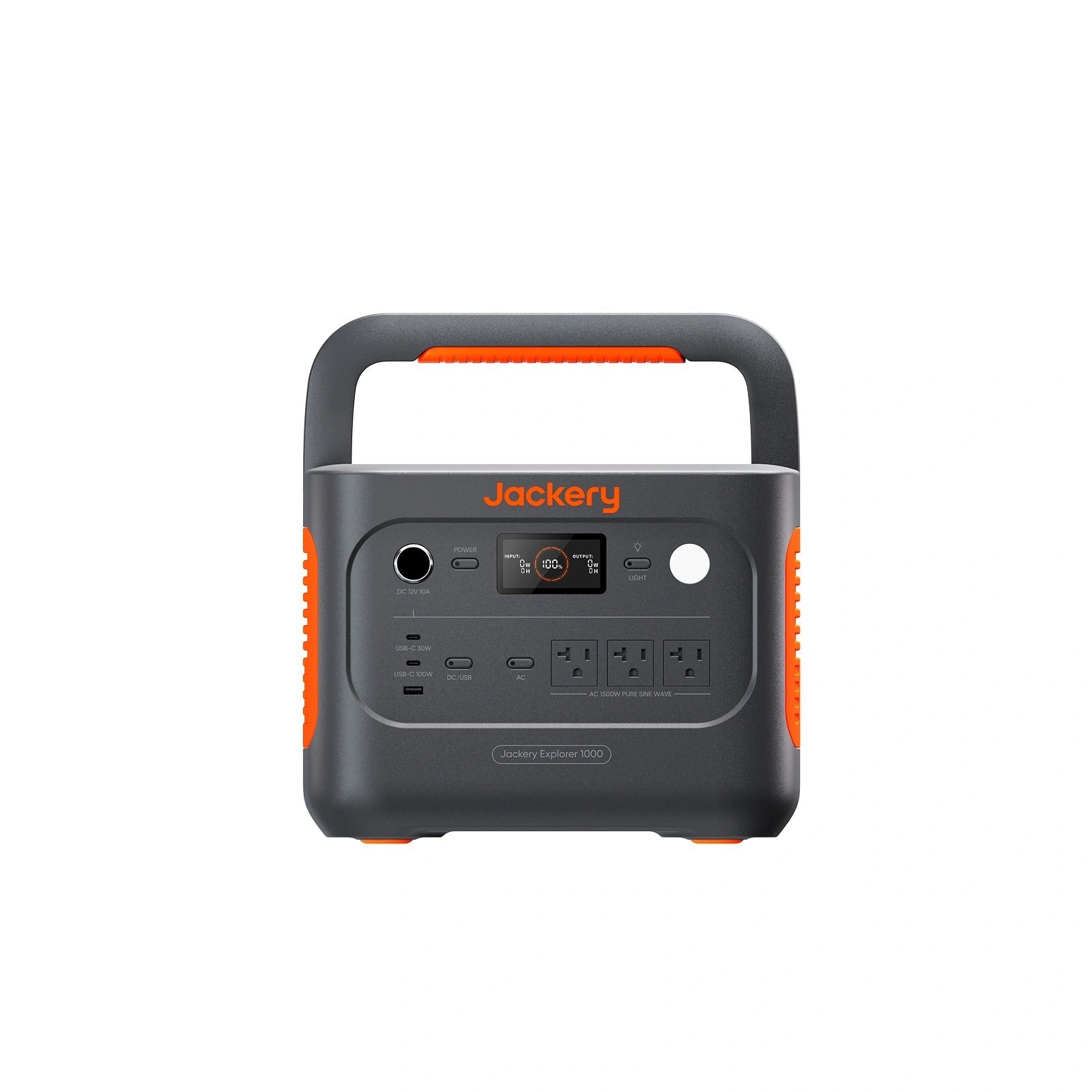
Who it’s for: Weekend camping, overlanding day-to-day carry, anyone who has abandoned a heavy “deal” unit in the garage.
Why it wins on usability: Official specs: 1,070 Wh, 1,500 W rated / 3,000 W surge, LiFePO4, 4,000 cycles to 70%+, 23.8 lb, 400 W max solar (dual DC8020). Standard wall charge is 1.58 hours; Emergency Super Charge (Jackery app) is ~59 minutes–1 hour 0–100%. It is not expandable. It is rarely the fastest charger or the most expandable box — it is the one you will actually put in the car every Friday.
Pros
- Best weight-to-capacity feel in the ~1 kWh club (23.8 lb)
- Simple interface; strong brand accessory ecosystem (SolarSaga)
- Enough AC for fridge + devices for most weekend trips; ≤20 ms UPS
Cons
- Lower continuous watts than Anker C1000 Gen 2 (2,000 W) / Bluetti AC180 (1,800 W)
- No battery expansion (use Explorer 1000 Plus if you need that)
- Solar input cap (400 W) is adequate, not maximal
Best if you might expand: EcoFlow DELTA 3 / DELTA 3 Plus
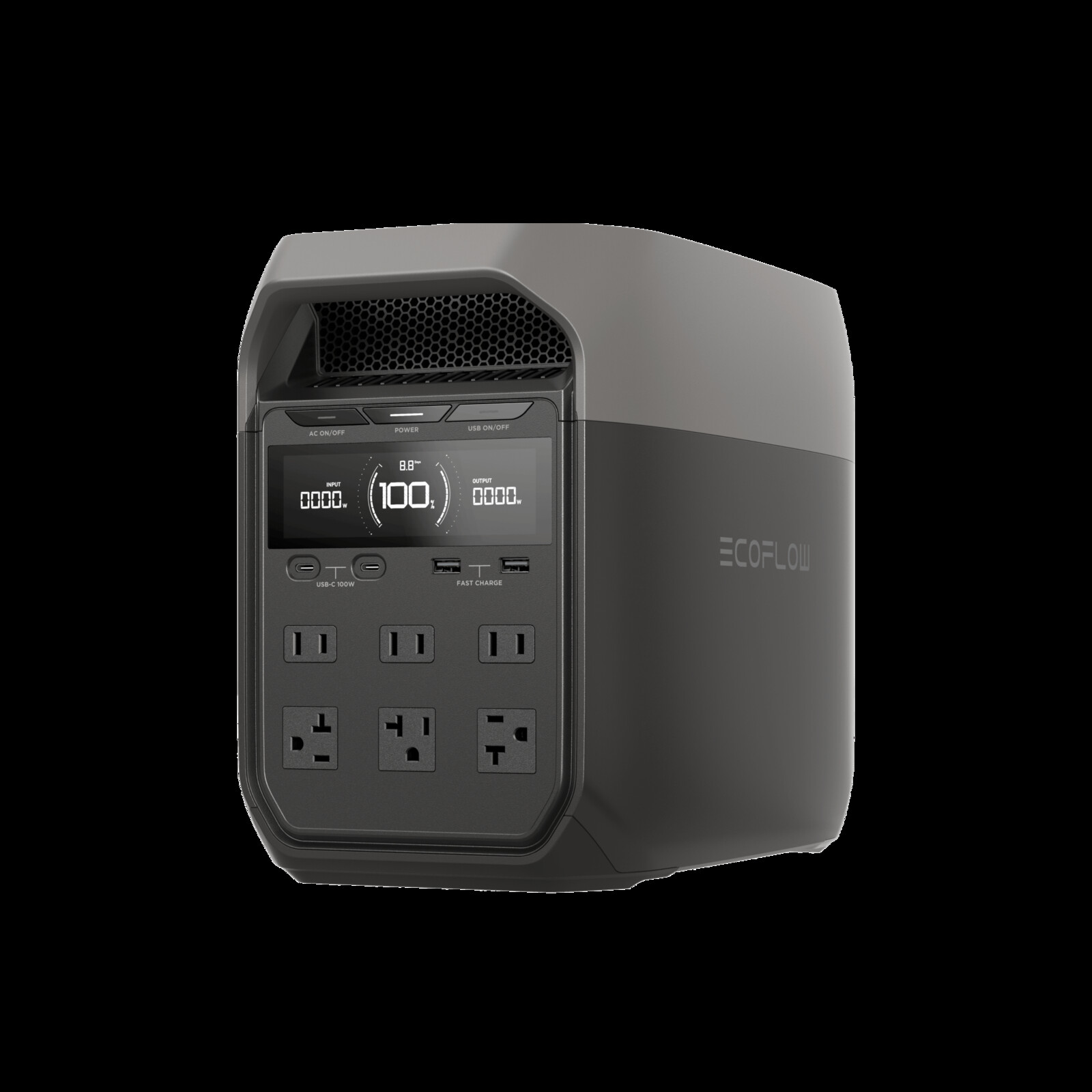
Who it’s for: Van life or blackout shoppers who suspect 1 kWh will not be enough in a year.
Why include it under $1k: Official DELTA 3 specs: 1,024 Wh, 1,800 W / 3,600 W surge, X-Boost 2,200 W, 27.6 lb, 500 W solar, 1,500 W AC in, 0–100% in 56 minutes, 4,000 cycles to 80%+, <10 ms UPS, expandable to 5 kWh (DELTA 3 / DELTA 2 / DELTA 2 Max / DELTA Pro 3 extra batteries). Brand street as of 5 Sep 2026: $629 sale / $699 regular — comfortably under $1k. Labor Day 2026 listings were ~$599.
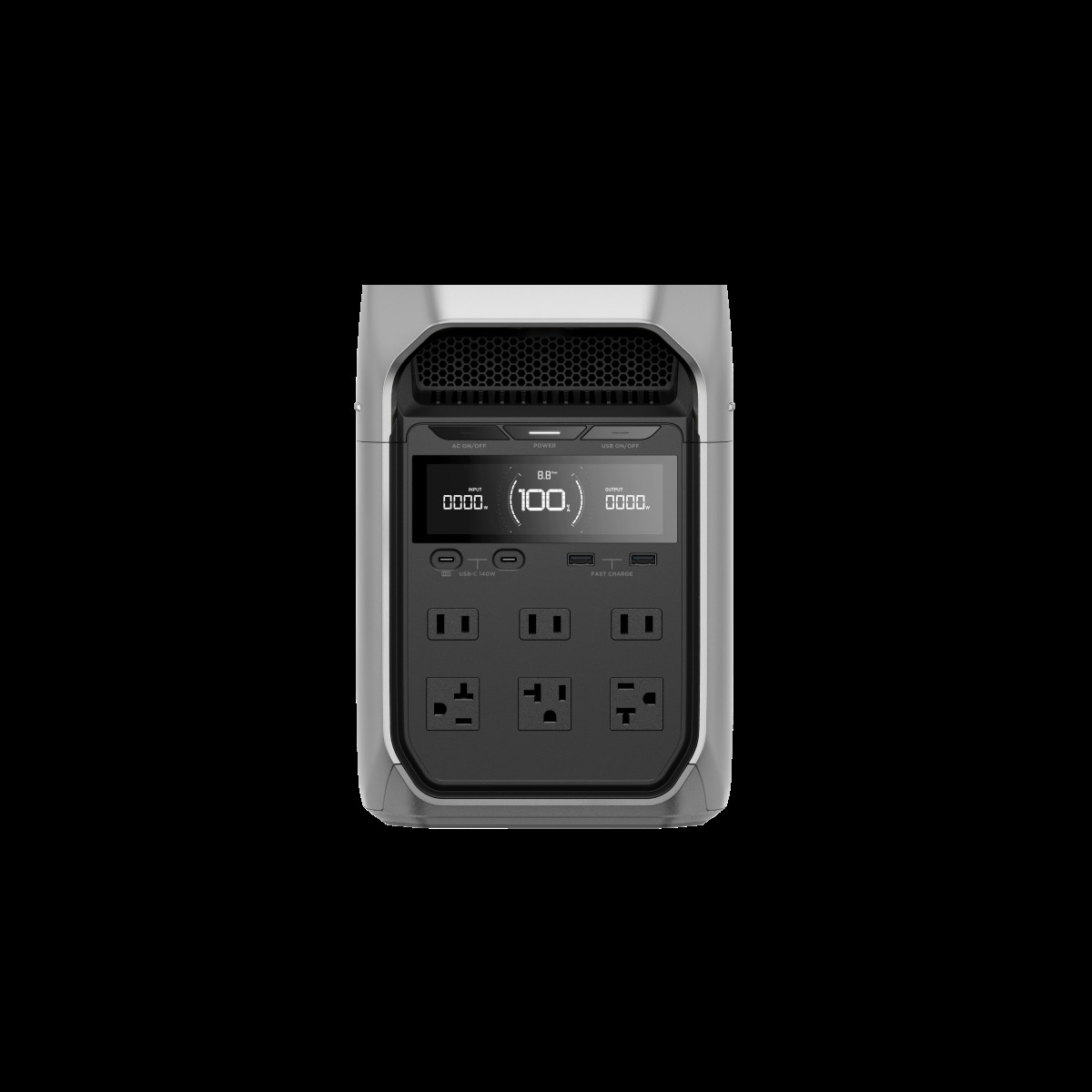
DELTA 3 Plus is the same 1,024 Wh / 1,800 W / 27.6 lb box with the meaningful upgrades: dual 500 W MPPT (1,000 W solar, ~70 min solar full), 2× 140 W USB-C (vs 100 W), 2× 36 W USB-A (vs 18 W). Brand: $719 sale / $799 regular (Labor Day ~$669). Solo Plus still clears $1k; Plus + extra battery (~$1,119–$1,299) does not. Confirm the exact SKU before you click. EcoFlow US pages sometimes show pre-order / restock language — check live ship date.
Pros
- True extra-battery path (up to 5 kWh)
- Fastest EcoFlow-class wall charge here (56 min)
- Strong app, 13 ports, IP65 battery pack
Cons
- Easy to blow the $1k cap once you add an extra battery or panel bundle
- Weight creeps as you expand
- More knobs = more ways to overbuy
- Base unit is under $1k today; treat that as live-check, not a permanent ceiling
CTA: EcoFlow DELTA 3 · EcoFlow DELTA 3 Plus
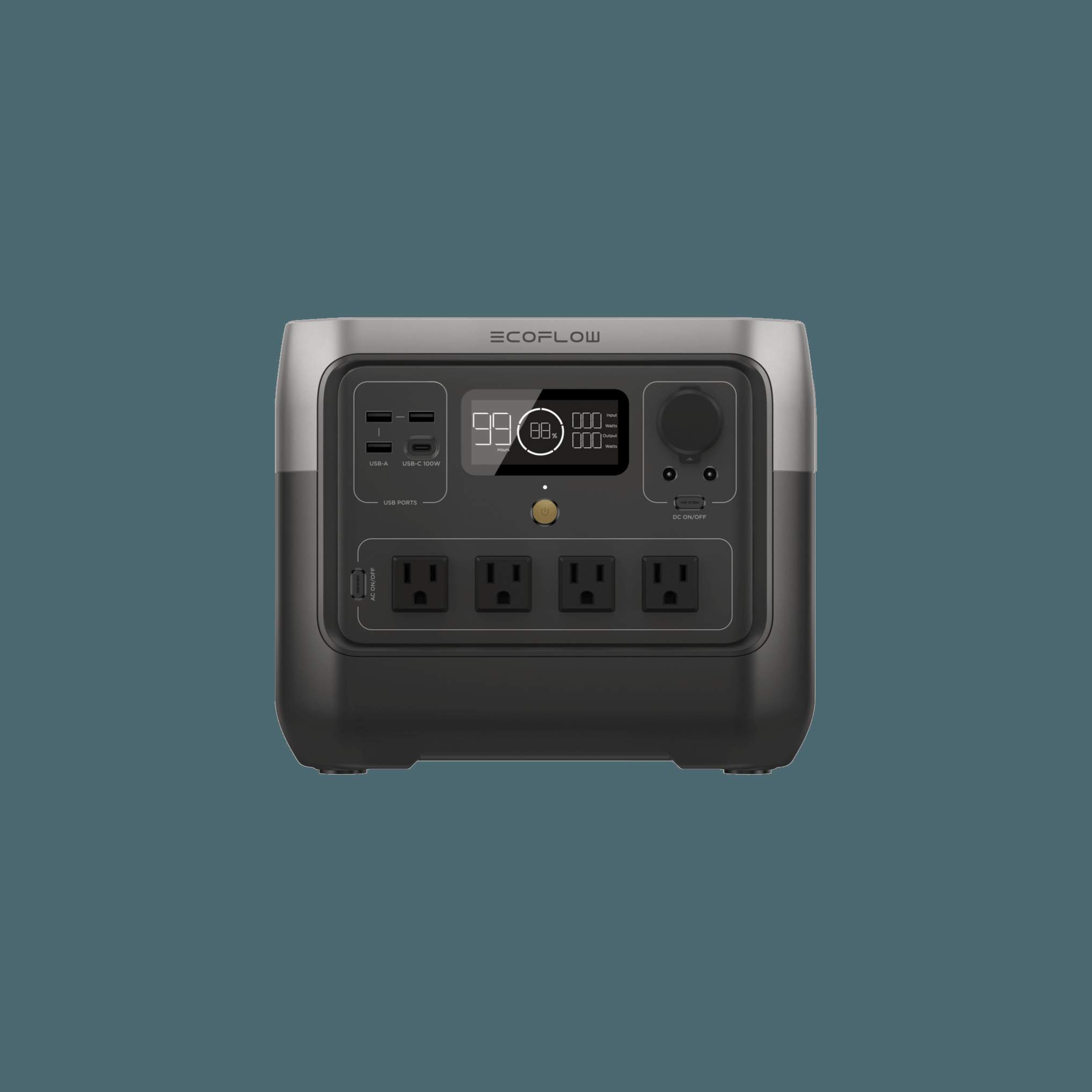
Best compact lane: EcoFlow RIVER 2 Pro (and RIVER 3 class)
Who it’s for: Apartment blackout kits focused on router, phones, laptop, LED lights, CPAP without heavy humidifier loads — not a full-size fridge for two days.
RIVER 2 Pro official: 768 Wh, 800 W continuous / 1,600 W X-Boost and surge, 18.2 lb, 220 W solar, 0–100% in 70 minutes (0–80% ~56 min), LiFePO4 3,000 cycles to 80%+. EcoFlow US $349 sale / $529 list as of 5 Sep 2026 (sometimes listed sold out / pre-order).
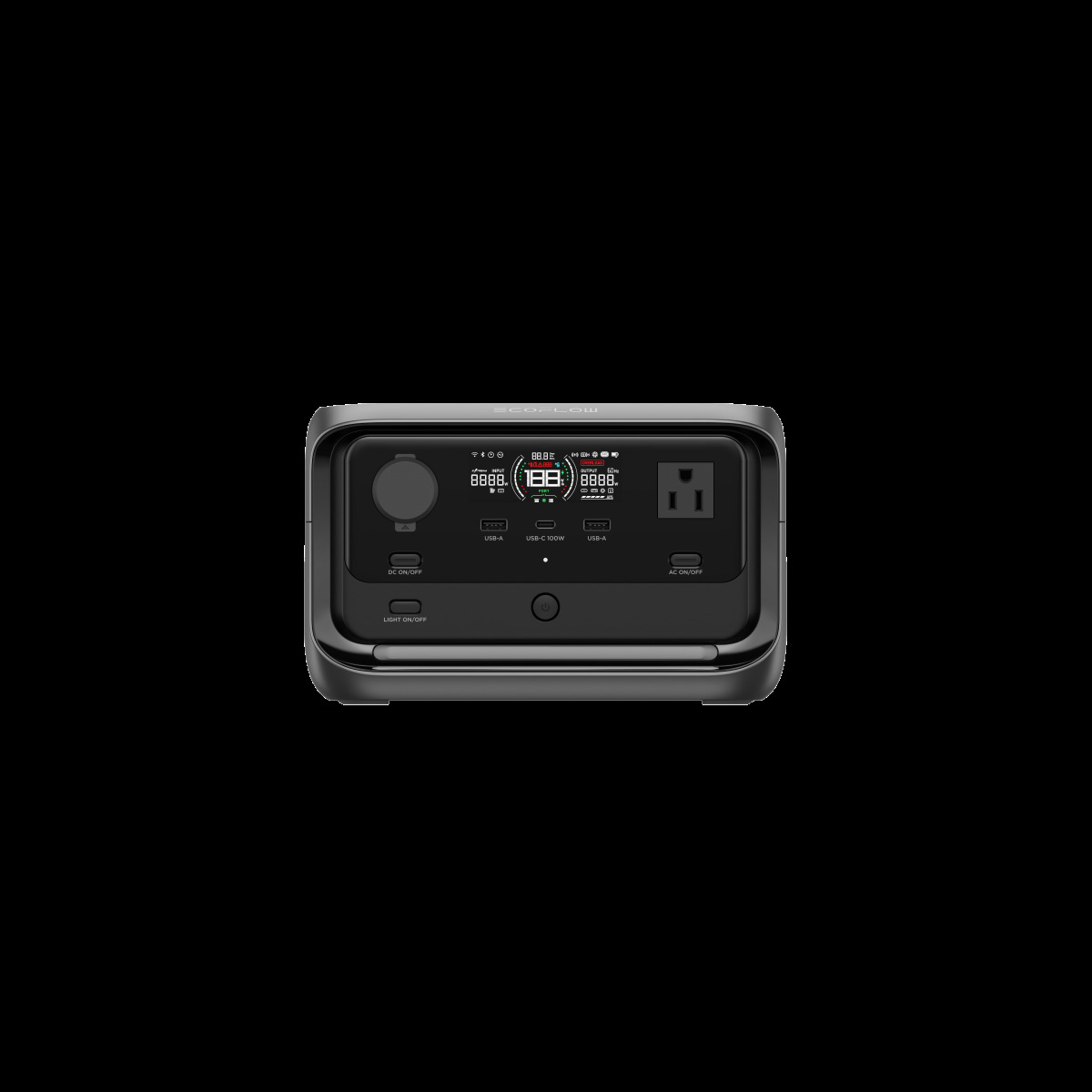
RIVER 3 is a different, much smaller class: 245 Wh, 300 W (X-Boost 600 W), 7.8 lb, 110 W solar, ~$239. RIVER 3 Plus is 286 Wh / 600 W (X-Boost 1,200 W), ~10.4 lb, 220 W solar. Neither replaces a 1 kWh fridge weekend.
At 768 Wh you are buying portability and price. Pair with a clear load list. If your fridge is non-negotiable for 24+ hours, step up to a ~1 kWh unit above.
Pros
- Easy to store and carry (18.2 lb for the Pro; 7.8 lb for RIVER 3)
- Fast recharge relative to size (70 min full on RIVER 2 Pro)
- Often the smartest first buy for urban users
Cons
- Not enough Wh for heavy multi-day fridge duty
- Lower continuous AC than 1 kWh flagships
CTA: EcoFlow RIVER 2 Pro · EcoFlow RIVER 3
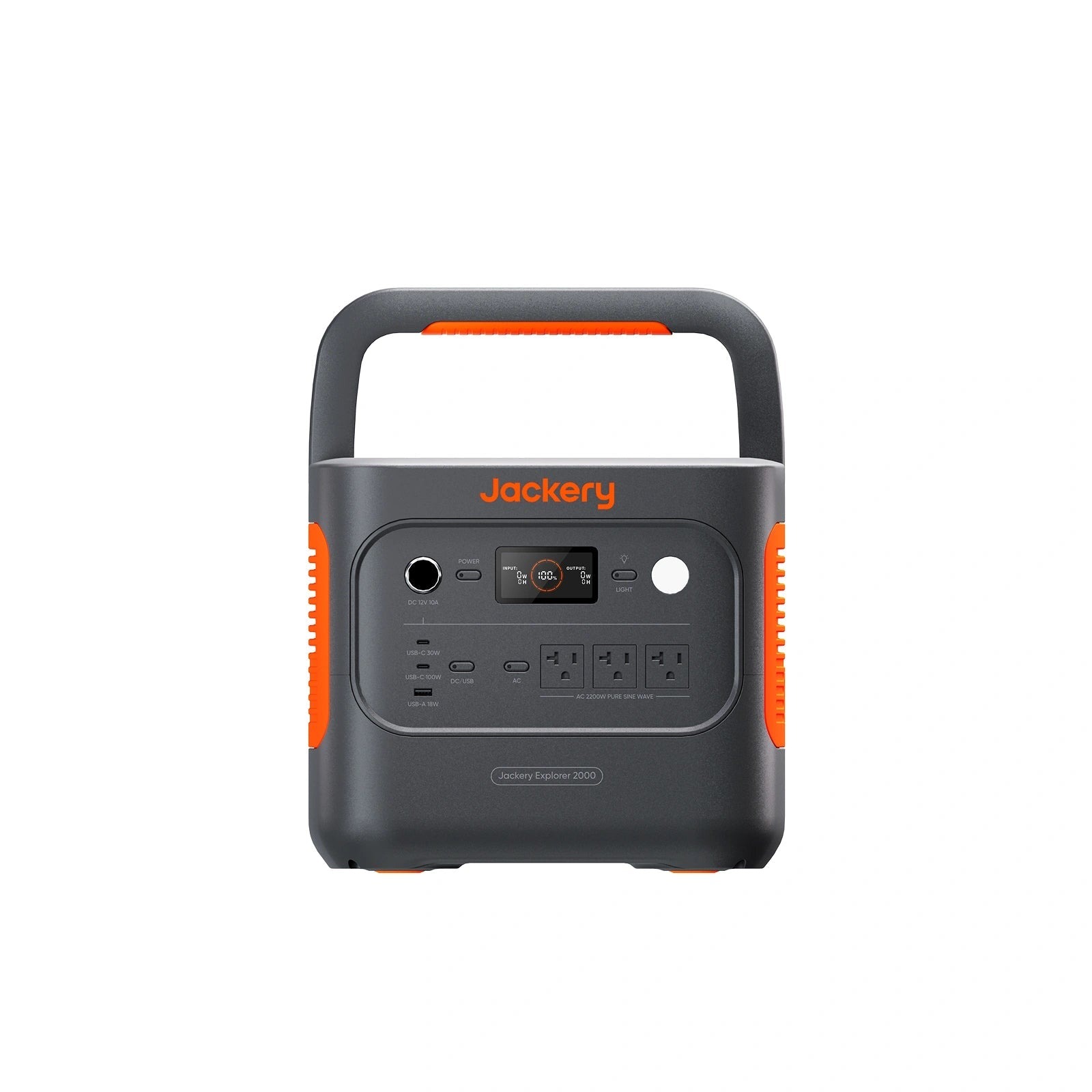
Honorable mention: Jackery Explorer 2000 v2 (sale only)
Official: 2,042 Wh, 2,200 W / 4,400 W surge, LiFePO4 4,000 cycles to 70%+, 39.5 lb, 400 W max solar, Emergency Super Charge ~1.7 hours 0–100% (spec table AC adapter 1.75 hr). Not expandable.
As of 5 Sep 2026 it is already under $1k: Jackery.com $899 sale / $999 regular; Amazon listings have been around $799. Historical list was $1,499. If it climbs back over $1,000, skip it for this roundup and stick to the 1 kWh class.
What size do you actually need?
Use this crude planner (device watts × hours = Wh, then add ~20% overhead):
| Load | Example draw | Hours | Wh needed |
|---|---|---|---|
| Wi‑Fi router | 10–20 W | 24 | 240–480 |
| Phones / tablets | 5–15 W avg | 24 | 120–360 |
| 12V compressor fridge | 40 W avg | 24 | ~960 |
| Mini fridge (AC) | 50–100 W avg | 12–24 | 600–2,400 |
| CPAP (check label) | device-dependent | 8 | varies |
CPAP note: Draws vary widely with humidifier and heated hose. Check your device wattage and talk to the manufacturer about approved DC cables and power options. A power station is just an inverter/battery — size it from real watts, not blog folklore.
If fridge + network + overnight medical-adjacent loads are all required, a single sub-$1k unit may cover a short outage but not a long one without solar. That is normal — do not overbuy “just in case” without doing the math.
Wall vs solar recharge: set expectations
- Wall: Mid-range 2026 units often hit full in roughly 1–2 hours. Published 0–100% fast modes: Anker C1000 Gen 2 49 min, EcoFlow DELTA 3 / 3 Plus 56 min, Jackery 1000 v2 Emergency ~1 hr (standard 1.58 hr), Bluetti AC180 turbo 1.3–1.8 hr (0–80% in 45 min).
- Solar: A 200 W foldable panel in real sun might deliver ~120–160 W average. Replacing ~1,000 Wh can take a long sunny day — or two mediocre ones. Buy panel wattage for your latitude and season, not the brochure peak.
- Car 12V: Slow. Fine for topping phones’ worth of energy on a drive, not for filling 1 kWh before camp.
Jackery SolarSaga 200W · EcoFlow 220W Bifacial · Bluetti PV200
Who should spend less than $500 instead
If your list is phones, camera batteries, a router, and a CPAP without a fridge, a RIVER / Anker C800 / Bluetti EB or AC50-class unit often wins. Put the savings into a panel or a better cable kit. We will cover the under-$500 lane in a dedicated guide; until then, do not let this roundup upsell you past your loads.
FAQ
Is a “solar generator” different from a power station?
Usually no. Marketing. You buy a battery station; solar panels are optional inputs.
Can I use these indoors during a blackout?
Unlike gas generators, lithium power stations produce no exhaust. Keep vents clear, follow the manual, and do not cover cooling fans. They are commonly used indoors for routers, lights, and fridges.
LiFePO4 vs NMC — which should I buy in 2026?
Default to LiFePO4 for longevity. Choose NMC only if weight is critical and you accept fewer cycles.
Will a 1,000 Wh unit run a refrigerator?
Often yes for hours to a day+, depending on fridge type, ambient temperature, and how often the door opens. Measure or look up average watts; do not trust “runs a fridge” marketing alone.
Do I need Amazon or brand sites?
For Jackery, EcoFlow, and Bluetti, brand affiliate networks (ShareASale/Impact) often pay better; Amazon is convenient and strong for Anker. We link both styles with … placeholders — use the live deal.
Bottom line
- Most people under $1k: Anker SOLIX C1000 Gen 2 or Jackery Explorer 1000 v2 if weight rules.
- Max Wh / output for the money: Bluetti AC180.
- Might expand later: EcoFlow DELTA 3 (confirm price).
- Small loads / first apartment kit: EcoFlow RIVER 2 Pro.
Next reads: Jackery vs EcoFlow vs Bluetti for weekend camping · How many Wh for fridge + Wi‑Fi + CPAP · Best solar generator for apartment blackouts
Specs verified against manufacturer pages 5 Sep 2026; street prices sampled the same day (Amazon + brand sites). Prices move weekly — re-check before publish.
 WattList
Leave a comment