Affiliate disclosure: WattList may earn a commission when you buy through links on this page (Awin, Amazon Associates, and similar). That does not change the math — we size from Starlink’s published watts and usable Wh after inverter loss. Specs move; verify your kit’s label.
As an Amazon Associate we earn from qualifying purchases.
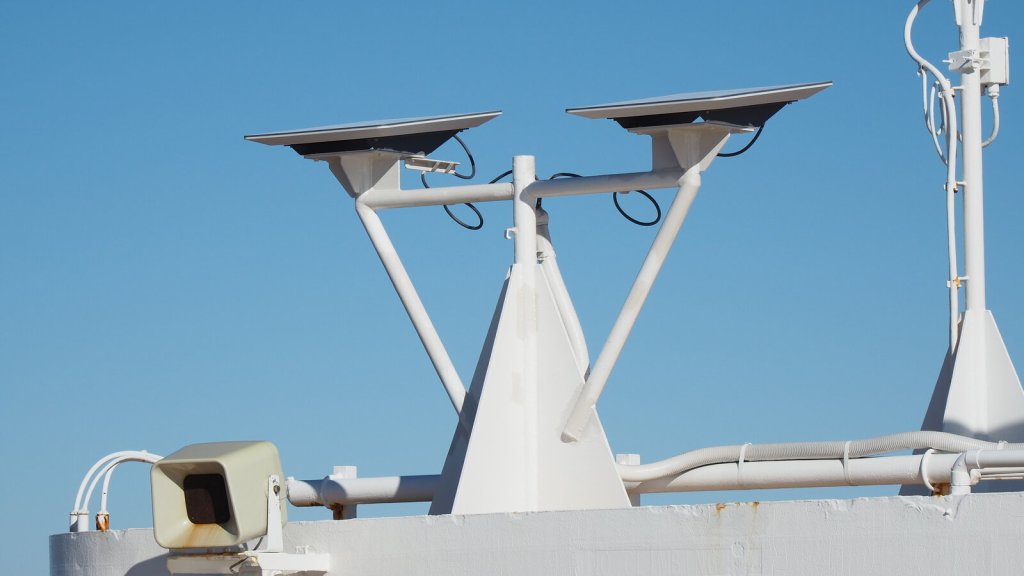
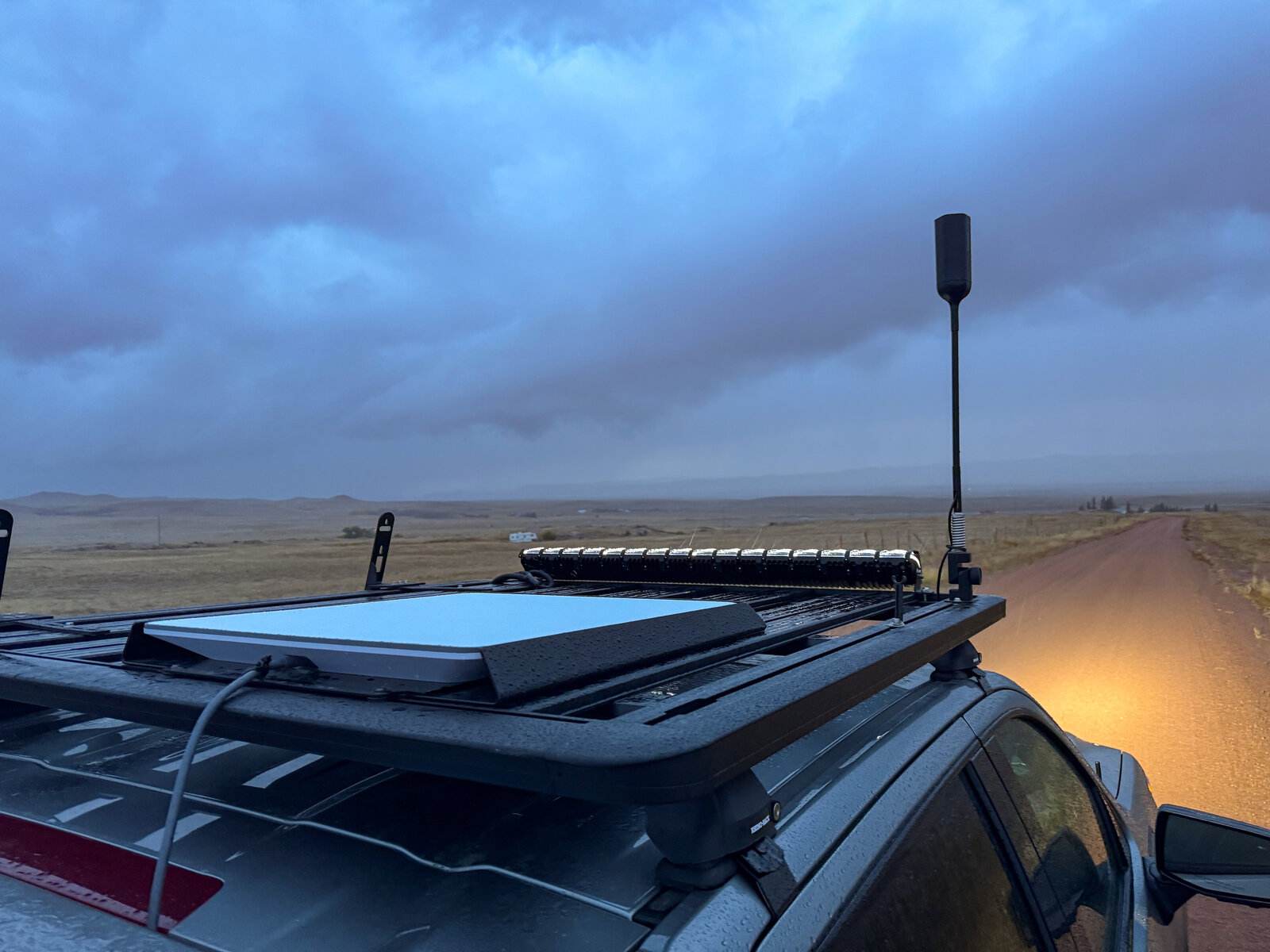
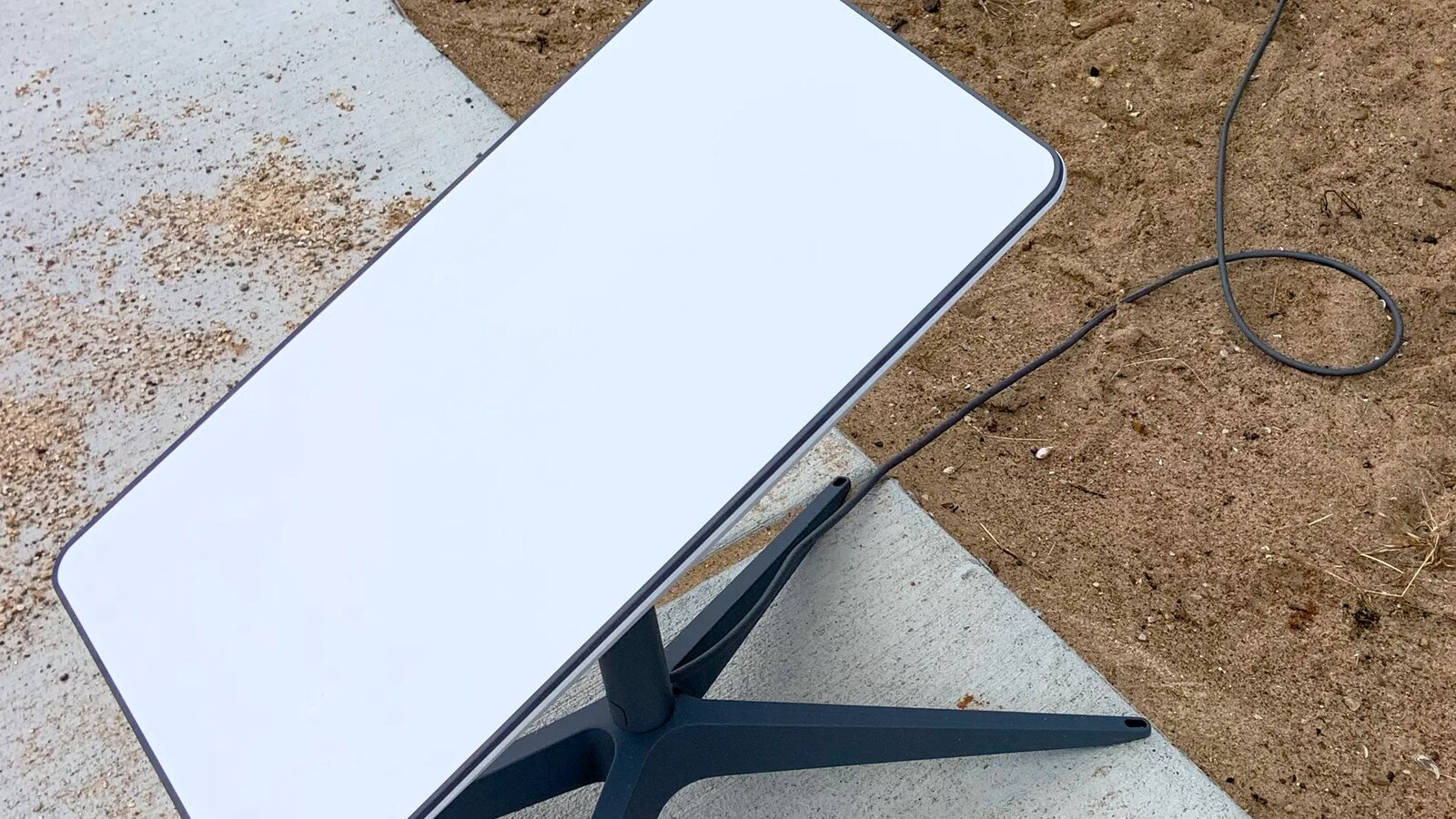
Starlink is not a 15 W home router. It is a phased-array dish plus Wi‑Fi, and the draw depends on which kit you own. Size the battery from Starlink’s own average watts — then apply WattList’s usable-Wh rule — or you will over-promise overnight internet.
Quick answer
| Starlink kit (published avg) | On ~1 kWh station (~870 Wh usable) | On AC180 1,152 Wh (~979 Wh usable) |
|---|---|---|
| Mini 20–40 W | ~22–43 h | ~24–49 h |
| Standard Actuated 50–75 W | ~12–17 h | ~13–20 h |
| Standard 4 / 4 X 75–100 W | ~9–12 h | ~10–13 h |
| Performance 110–150 W | ~6–8 h | ~7–9 h |
Formula: Hours ≈ (station Wh × 0.85) ÷ Starlink watts
Bluetti AC180 · Jackery Explorer 1000 v2 · Anker SOLIX C1000 Gen 2 · EcoFlow DELTA 3
Code watt5 — 5% off at BLUETTI (excl. accessories & flash sales).
Starlink watts we use (official averages)
These are AC input averages for the Starlink hardware + Wi‑Fi router + power supply + cables, from Starlink’s support power article and kit specification sheets. Temperature, sky view, snow melt, and utilization move you around the band.
| Kit | Published average | Idle (where listed) | Notes |
|---|---|---|---|
| Starlink Mini | 20–40 W (support); Mini sheet also 25–40 W | ~15 W | Input 12–48 V, 60 W max on DC path |
| Standard Actuated | 50–75 W | ~20 W | Older “actuated” standard class |
| Standard 4 / Standard 4 X / Enterprise | 75–100 W | ~20 W | Current standard residential class |
| Starlink V5 | 35–50 W | — | Newer lower-draw residential option where offered |
| Performance (Gen 1 / Gen 2) | 110–150 W | ~45 W | High-throughput / HP class |
| Flat High Performance (spec sheet) | 110–150 W | — | Same high band on equipment PDFs |
Mini USB-C rule (Starlink): use a 100 W PD source at 20 V / 5 A with Starlink’s USB-C → barrel accessory for best results. Mini will not work reliably with USB PD at 65 W or below.
We do not publish DIY vehicle wiring, fuse sizing, or alternator procedures. If you use a brand DC cable or Starlink’s DC accessories, follow the manufacturer.
The WattList formula
- Start with nameplate Wh on the power station.
- Take ~85% usable for AC inverter + BMS overhead (
Wh × 0.85). - Divide by Starlink’s average watts for your kit.
Hours ≈ (Wh × 0.85) ÷ Starlink_W
Wh_per_day ≈ Starlink_W × 24| Kit average | Wh / day (continuous) |
|---|---|
| Mini 20 W | 480 Wh |
| Mini 40 W | 960 Wh |
| Standard Actuated 50 W | 1,200 Wh |
| Standard Actuated 75 W | 1,800 Wh |
| Standard 4 @ 75 W | 1,800 Wh |
| Standard 4 @ 100 W | 2,400 Wh |
| Performance @ 110 W | 2,640 Wh |
| Performance @ 150 W | 3,600 Wh |
A ~1 kWh station covers a Mini day comfortably at the low end, and struggles for a full Standard 4 day without solar top-up. That gap is the whole point of this guide.
Broader blackout math (fridge + Wi‑Fi + overnight loads): How many Wh for fridge, Wi‑Fi & CPAP.
Spotlight: two ~1 kWh stations people actually buy
Bluetti AC180 — 1,152 Wh (value Wh)
Usable: ~979 Wh (1,152 × 0.85) Why it shows up here: most Wh in the common under-$1k band on many street prices; dense ports; 35.3 lb.
| Starlink kit | Hours on AC180 (illustrative) |
|---|---|
| Mini 20–40 W | ~24–49 h |
| Standard Actuated 50–75 W | ~13–20 h |
| Standard 4 75–100 W | ~10–13 h |
| Performance 110–150 W | ~7–9 h |
Shop: Bluetti AC180 · pair solar with Bluetti PV200 if you need daytime recovery.
Code watt5 — 5% off at BLUETTI (excl. accessories & flash sales).
Jackery Explorer 1000 v2 — 1,070 Wh (lightest ~1 kWh daily driver)
Usable: ~910 Wh (1,070 × 0.85) Why it shows up here: 23.8 lb — the one you will actually carry to the van, cabin, or balcony.
| Starlink kit | Hours on 1000 v2 (illustrative) |
|---|---|
| Mini 20–40 W | ~23–45 h |
| Standard Actuated 50–75 W | ~12–18 h |
| Standard 4 75–100 W | ~9–12 h |
| Performance 110–150 W | ~6–8 h |
Shop: Jackery Explorer 1000 v2
Same class of battery. Same lesson: the dish decides the day count as much as the Wh sticker.
Full runtime table (Starlink-only, AC path)
Usable = nameplate × 0.85. Hours shown as low–high across Starlink’s published average band.
| Station | Wh | Usable | Mini 20–40 W | Std Actuated 50–75 W | Std 4 75–100 W | Performance 110–150 W |
|---|---|---|---|---|---|---|
| EcoFlow RIVER 2 Pro | 768 Wh | 653 Wh | 16–33 h | 9–13 h | 7–9 h | 4–6 h |
| Anker SOLIX C1000 Gen 2 | 1,024 Wh | 870 Wh | 22–43 h | 12–17 h | 9–12 h | 6–8 h |
| EcoFlow DELTA 3 | 1,024 Wh | 870 Wh | 22–43 h | 12–17 h | 9–12 h | 6–8 h |
| Jackery Explorer 1000 v2 | 1,070 Wh | 910 Wh | 23–45 h | 12–18 h | 9–12 h | 6–8 h |
| Bluetti AC180 | 1,152 Wh | 979 Wh | 24–49 h | 13–20 h | 10–13 h | 7–9 h |
| Jackery Explorer 2000 v2 | 2,042 Wh | 1,736 Wh | 43–87 h | 23–35 h | 17–23 h | 12–16 h |
Anker SOLIX C1000 Gen 2 · EcoFlow DELTA 3 · Jackery Explorer 1000 v2 · Bluetti AC180 · Jackery Explorer 2000 v2 · EcoFlow RIVER 2 Pro
What these hours are not
- Not a lab measurement of your exact dish on your exact night.
- Not including a fridge, laptop, or phone stack — add those Wh separately.
- Not DC-path magic: a proper DC supply can cut inverter loss, but only with the right Starlink / station accessories.
- Not medical or life-safety advice.
If Standard 4 is your kit and you need 24 h of Starlink with margin, plan ~2 kWh of nameplate (or ~1 kWh + serious daytime solar). Mini owners can often live in the ~1 kWh class.
Solar recovery cheat sheet: Best foldable solar panels for portable power stations. Starter kit (station + panel + cable): Portable power station starter kit.
FAQ
Can a normal USB power bank run Starlink? Usually no for Standard kits. Mini wants 100 W USB-C PD (20 V/5 A) with Starlink’s cable — most phone banks are not that.
Should I use the homepage “45 W” Starlink toggle? Treat that as a rough midpoint for mixed Wi‑Fi loads. For Starlink shopping math, prefer the kit-specific ranges above.
Does snow melt ruin the estimate? It can. Mini sheets list snow-melt class draws around 60 W; Standard kits climb when heaters run. Budget the high end of the average band in winter.
AC180 or Jackery 1000 v2 for Starlink camping? Same ~1 kWh class. Pick AC180 for max Wh/$ and ports; pick 1000 v2 if carry weight wins. For Standard 4 all-day + margin, look at 2 kWh class or solar.
Bottom line
Read your Starlink kit’s published average watts, shrink the battery by ~15% for AC usable Wh, then divide. Mini and Standard 4 are different animals on the same 1 kWh station — roughly a day-plus vs a workday.
Shop the spotlight tanks: Bluetti AC180 · Jackery Explorer 1000 v2
Next reads: Wh sizing · Under $1,000 stations · Van life · Starter kit
Starlink watt ranges from Starlink support power documentation and public kit specification sheets (Mini / Standard / Performance). Station Wh from WattList Sep 2026 spec pass. Hours are illustrative — verify the day you buy.
 WattList
Leave a comment